
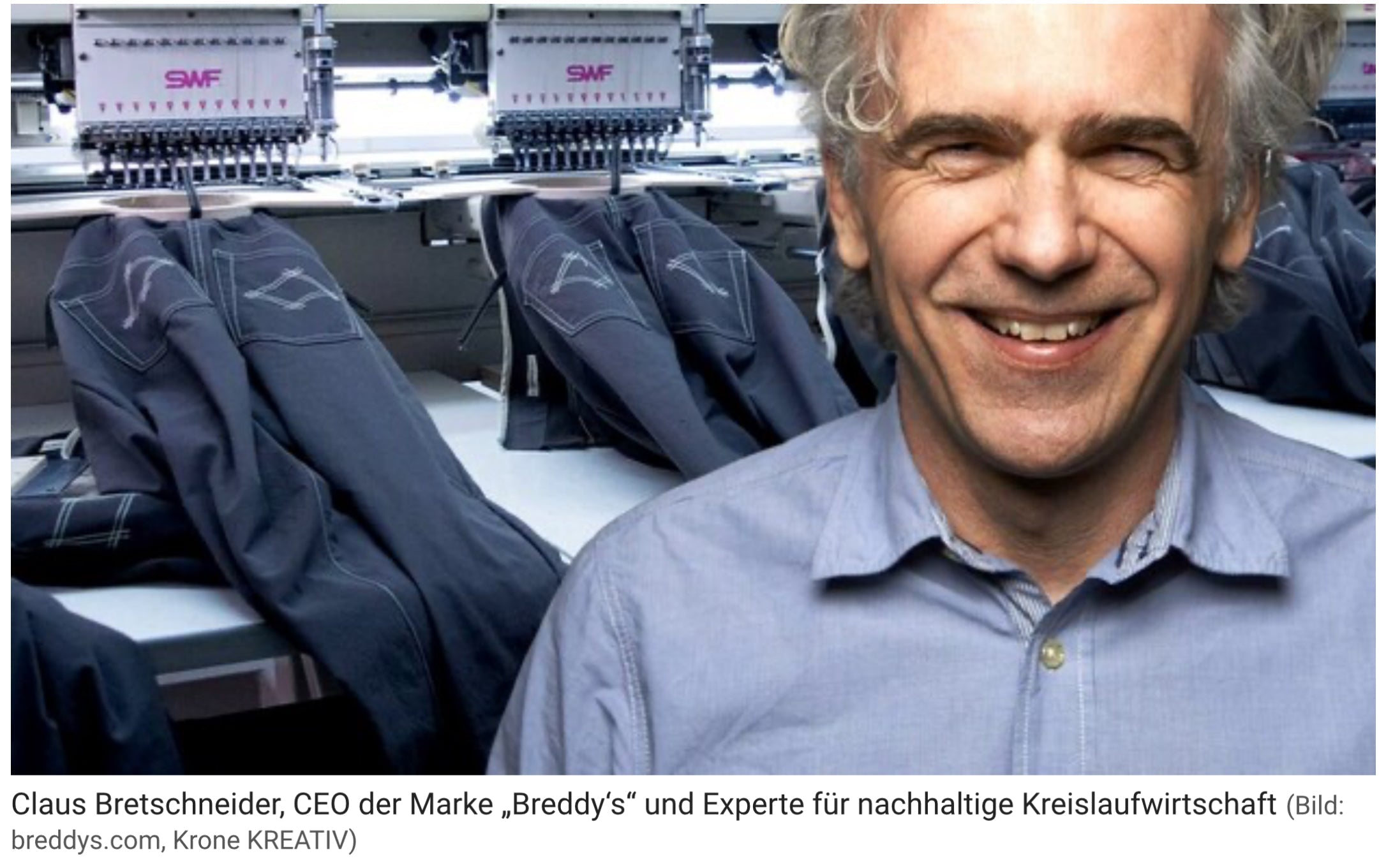
A commentary on the reality behind fast fashion – and a plea for conscious consumption.
"Nobody makes a profit on a €7 pair of jeans from Temu." - Claus Bretschneider, expert for textile production & sustainability
👉 Click here for the full article in the Kronen Zeitung
How much does a piece of clothing really cost?
A pair of jeans for seven euros sounds like a good deal. But in his interview with the Kronen Zeitung, Claus Bretschneider sums it up perfectly: "In the end, there's nothing left for anyone – neither for the seamstresses, nor for the environment, nor for the quality."
What appears to us as a saving at the checkout causes invisible costs : poor working conditions, environmental pollution, microplastics and massive textile waste after a short wearing period.
What does fast fashion mean for producers and consumers?
Platforms like Temu or Shein focus on speed and volume.
The consequences:
-
Textiles are becoming disposable goods
-
Production costs are passed on to people and the environment.
-
Fair producers are being driven out of the market due to price differences.
A system that maximizes profits but takes no responsibility.
What makes BREDDY'S different?
We believe in clothes that you wear for a long time , that you enjoy wearing – and with a clear conscience.
That's why we produce exclusively in Europe, with short supply chains and under fair conditions. Our fabrics are made from innovative, resource-saving materials such as Tencel or castor fiber.
Our prices are calculated fairly – not only for you, but also for everyone involved in the production.
How can you consume consciously – without sacrificing style?
Next time you go shopping, ask yourself a few simple questions:
-
How often will I actually wear this item?
-
How was it produced – and by whom?
-
What value does it still have for me after a year?
Because those who buy quality buy less often, wear more consciously – and save in the long run.
You can find more information on this topic in our articles: