
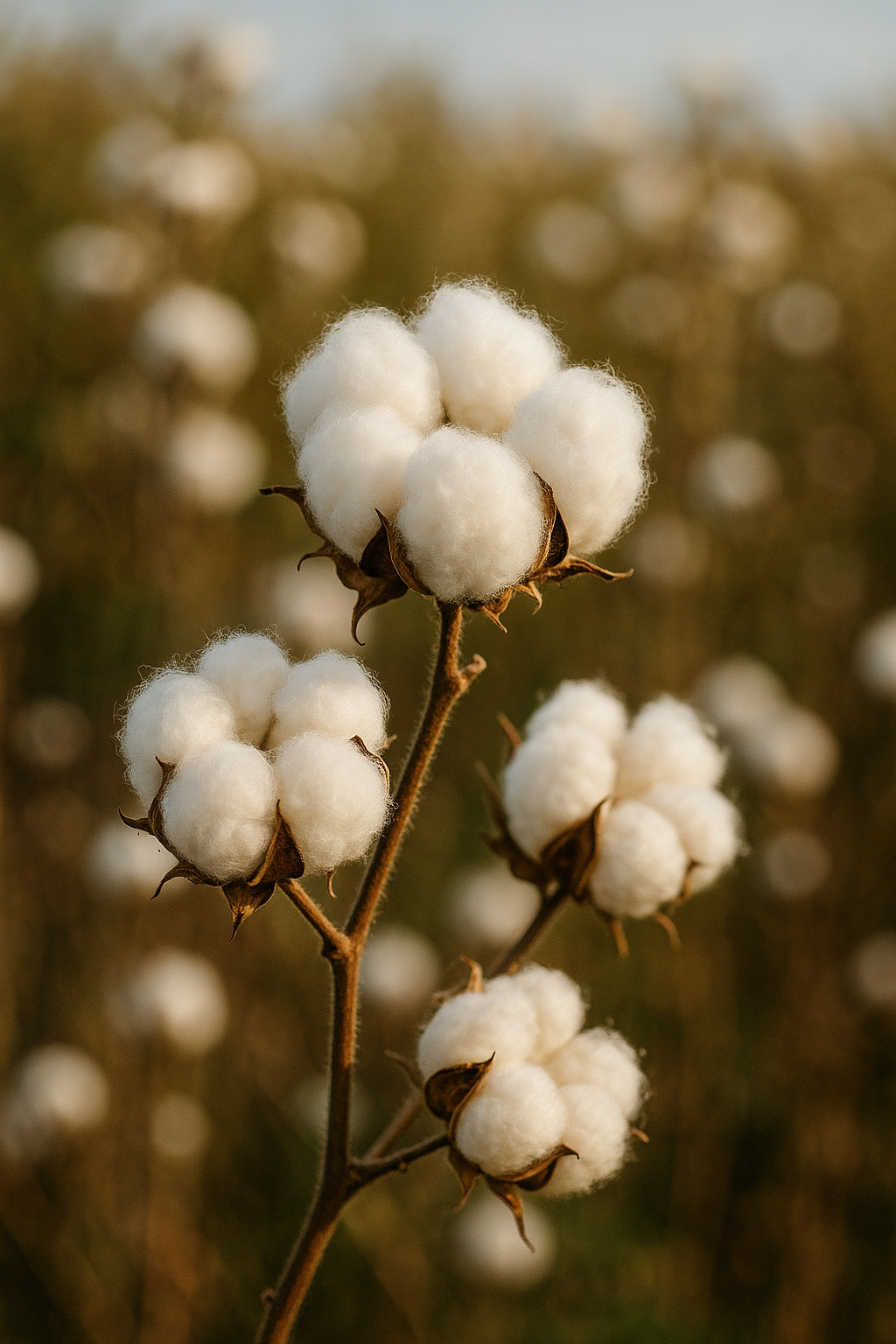
Why we at BREDDY'S consistently avoid cotton – including organic cotton.
What many don't know: Cotton is a raw material with a high price – both ecologically and socially.
Cotton is considered natural, plant-based, and superior to synthetics. But as soon as you look beyond the image, a different picture emerges:
-
On average, 2,700 liters of water are needed to produce a single cotton shirt.
-
Most of it comes from regions with extreme water scarcity – e.g., India, Pakistan, Uzbekistan.
-
Conventional farming is pesticide-intensive, damages soils and endangers farm workers.
-
Even organic cotton does not solve the fundamental problem: the water and land requirements remain high, and reliable controls in the supply chain are often lacking.
Therefore, it is clear to us:
Cotton is not the sustainable solution, but part of the problem.
Organic cotton is also not an option for us .
What we use instead – and why it's better
Our materials are based on a clear principle: functionality, durability and resource conservation.
Tencel – a cellulose fiber made from wood, produced in a closed-loop system with 95% water recycling. Extremely soft, temperature-regulating, and antibacterial.
Castor fiber – elastic, robust, and plant-based. A technical alternative to elastane – petroleum-free and microplastic-free.
These materials not only have a significantly better environmental footprint than cotton, but are also functionally superior – especially in everyday life, at work and when traveling.
Cotton is made for fast fashion – not for responsible clothing.
Our decision against cotton – and against organic cotton – is conscious and clearly justified:
-
No high water consumption
-
No sprawling, opaque supply chains
-
No cultivation systems at the expense of others
-
No compromises on function, comfort and durability
We produce clothing that will last you a long time , is sustainably produced and significantly reduces resource consumption.
What you should pay attention to on your next shopping trip
Ask yourself three simple questions:
-
How was this material produced – and where?
-
How much water, space, and energy does it consume?
-
Will I still be able to wear this in two years – and will it still look good then?
Only then will sustainable consumption become more than a label – but a real decision.